

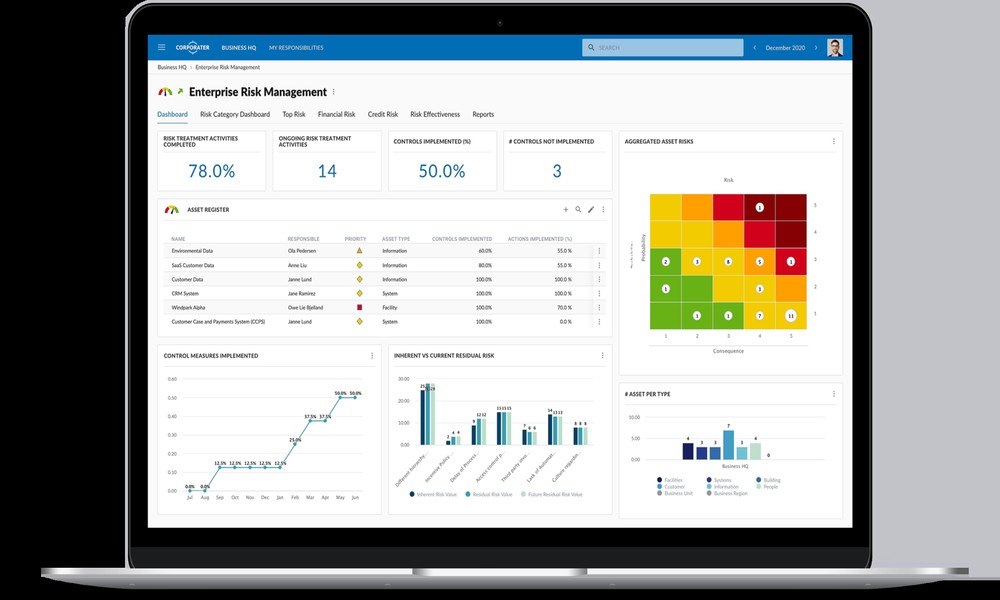
Clear decision-making depends on stable control methods within every company. The title Importance of ERM software for building consistent risk management frameworks in organizations shows how structured monitoring keeps operations steady. Many firms depend on erm software to track threats, review reports, and guide responsible actions. Without proper tracking, different teams may follow different rules. This creates confusion during audits. A single system helps maintain uniform steps. Strong coordination improves trust, planning, and long-term stability.
Core functions supporting consistent monitoring
Proper tools help teams record actions in the same format. Standard records prevent missing information during reviews.
• Stores incident details using one format for all departments
• Tracks approvals through controlled steps for every report
• Sends alerts when limits are crossed in operations
• Maintains history logs for audits and inspections
• Assigns duties clearly to responsible team members
• Creates reports automatically without manual calculation errors
• Connects policy rules with daily work activities
• Supports review meetings using updated information instantly
Stable structure for organizational risk control
Every department handles problems in different ways without a shared system. Uniform rules help teams follow the same reporting method.
Central tracking allows leaders to review updates quickly. Consistency reduces mistakes during internal reviews.
Clear visibility across multiple business units
Large organizations manage many activities at the same time. Separate records create gaps in monitoring.
Shared dashboards allow a quick understanding of the current status. Leaders can compare results without confusion.
Reporting discipline improves internal communication
Reports become reliable when everyone follows the same pattern. Managers understand updates without asking for extra details.
Clear records reduce delay during inspections. Accurate data support better planning decisions.
How consistent monitoring improves decision quality today?
Organizations face many small risks every day. When records stay in different files, leaders cannot judge correctly. Using a shared system allows teams to see the same numbers at the same time.
This removes confusion during meetings. Better monitoring also helps during audits. When information stays organized, answers come quickly.
Leaders focus on solving problems instead of searching for data. Clear visibility leads to stronger control over daily operations.
Uniform policy tracking across departments
Rules must remain the same in every branch. Different methods create gaps in control. Shared tracking keeps everyone aligned.
Risk control activity comparison table
|
Control Area |
Without System |
With Structured Tool |
Result |
|---|---|---|---|
|
Incident reporting |
Different formats used |
Single format used |
Easy review |
|
Policy updates |
Manual sharing |
Automatic update alerts |
Faster response |
|
Audit preparation |
Data collected late |
Data stored continuously |
Less delay |
|
Responsibility tracking |
Unclear ownership |
Assigned roles visible |
Better control |
|
Compliance checks |
Separate records |
Central monitoring |
Accurate status |
Common doubts about organized risk tracking
• How does the monitoring tool help during audits? keeps records ready for review.
• Can teams use one system for all departments? Yes, the single record method works.
• Does tracking reduce manual reports? Automatic reports save time.
• Will managers see updates quickly? The shared dashboard shows live data.
• Is training required for staff usage? A simple interface allows quick learning.
• Does the system support policy review? Rules stored for regular checking.
Consistent control improves operational confidence
Reliable monitoring builds trust inside the company. Leaders depend on clear records for planning. Teams follow the same steps every day. Before closing review, many companies again check erm software data for accuracy.
A reliable framework supports long term stability
Strong control comes from repeated discipline. Organizations that follow one method avoid confusion during audits. Uniform tracking keeps reports clean and useful. Careful execution matters more than complex plans.
Strong systems create lasting reliability
Progress depends on steady control rather than quick fixes. Organizations that keep records clear avoid sudden problems. Uniform tracking supports better judgment in difficult situations. Simple routines followed daily bring better stability. Careful monitoring always leads to dependable results.
