

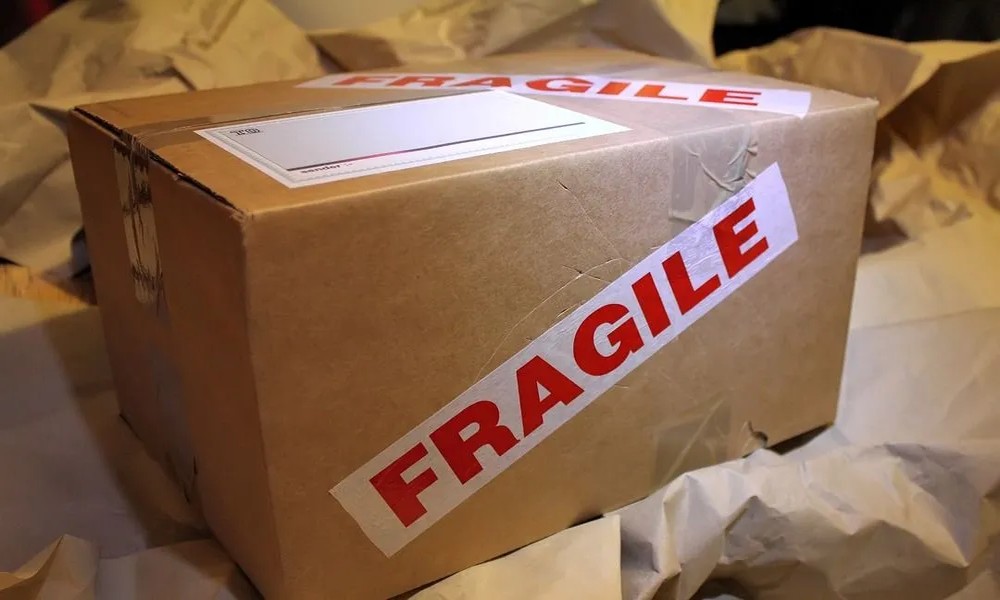
A package leaves Newport Beach in good shape. By the time it reaches its destination, the ceramic vase is in pieces, the framed print has a cracked corner, the wine glasses are unrecognizable. The customer files a claim, the carrier inspects the packaging, the claim gets denied because the inner box collapsed under load. The team at Newport Beach Mailboxes & More sees this play out a few times every month, and almost always, the problem traces back to one or two preventable choices made before the package ever left the house.
Fragile shipping is largely about physics, not luck. The carriers do not slow down for any package. The packing has to do the work.
The Double-Box Rule, and Why It Matters More Than the Sticker
The most reliable technique for fragile items is the box-in-box method, more commonly called double-boxing. The principle is simple. The item lives inside an inner box with two to three inches of cushioning on every side. That inner box sits inside an outer box at least three inches larger in every dimension, with void fill packed tightly in the gap between the two.
The point of all of that is impact isolation. When the outer box hits a sortation belt edge or gets dropped from a truck, the energy dissipates through the void fill before it reaches the inner box. A single-box package transfers the impact directly to the item. A properly double-boxed package can survive a four-foot drop without the contents registering it.
A few details decide whether the technique actually works:
- The boxes should be new or nearly new. Reused boxes are weaker, even when they look fine.
- The outer box should be rated to the weight, marked by the round Edge Crush Test stamp on the bottom flap.
- The inner box has to be sealed and reinforced, not just folded shut.
- The void fill between the two boxes must be tight enough that nothing shifts. Lift the outer box and shake gently. If anything moves, more fill goes in.
Void Fill Choices, Matched to the Item
Not all packing material is interchangeable. The right fill depends on what is being shipped.
- Bubble wrap is the right wrap directly against the item. Small-bubble for ceramics, glass, and electronics. Large-bubble for cushion around already-wrapped pieces.
- Air pillows work as void fill in the outer box. They are light and cheap, but they collapse under direct impact and are no substitute for wrapping.
- Packing peanuts work as void fill only when the item is already individually wrapped. Items migrate to the bottom of the box during transit when peanuts are the only protection.
- Crumpled kraft paper is the workhorse for filling void and for wrapping irregularly shaped items. Layered paper provides surprisingly good cushioning at low cost.
- Foam-in-place and custom-cut foam are the gold standard for high-value or oddly shaped items, typically available only at professional packing stores.
The combination most often used at Newport Beach Mailboxes & More for ceramics, glassware, and decorative items is bubble wrap directly on the piece, an inner box snug against the wrapped item, and crumpled paper or peanuts filling the outer box around it.
The Fragile Sticker Does Not Slow Down a Sortation Belt
The persistent myth in fragile shipping is that a “Fragile” or “Handle With Care” label on the outside of the box causes the carrier to treat the package differently. In automated sorting facilities, packages move through systems that do not read those stickers. The labels register visually only at the loading dock and during manual handling, which is a small fraction of any package’s journey.
Carriers do offer special handling services for an additional fee on certain shipments. Most domestic packages through USPS, UPS, FedEx, and DHL travel through the same automated sortation regardless of what is written on the box. Energy spent on labeling is better spent on packing. Internal protection is the only protection that consistently matters.
Insurance, Declared Value, and What the Coverage Actually Buys
Carrier “insurance” is technically declared value coverage, a contractual maximum the carrier will pay if a claim is approved. It is not a guarantee that the carrier will pay.
A few realities apply across the major carriers:
- The first $100 of declared value is typically included free on most services. Additional coverage is available for purchase up to a per-package cap.
- Claims are routinely denied when the carrier determines that packaging was inadequate. The double-box rule is not a courtesy. It is the standard the carrier applies when deciding whether the claim succeeds.
- Special categories, including art, antiques, jewelry, currency, and cellular phones, often carry lower coverage limits or require special declaration.
- Proof of value is required at claim time. Receipts, appraisals, and photographs of the item before packing all speed the process.
- For high-value items, third-party shipping insurance providers often pay out more reliably than carrier declared value, although they require their own documentation.
The right declared value for any shipment is the actual replacement cost of the item, supported by a receipt or appraisal kept on file.
Items That Should Not Be DIY Packed
Some categories consistently cause problems when packed at home and consistently survive when packed by a professional:
- Large flat-screen televisions, which require either the original packaging or a specialty TV box with custom inserts
- Original artwork, especially framed pieces with glass or acrylic, which need glassine paper, corner protectors, and a custom outer crate or telescoping art box
- Antiques, marble, stone, and crystal, which usually require foam-in-place or custom crating
- Wine and spirits, which most carriers will only ship through licensed alcohol shippers using approved wine shipping containers
Bringing the Package to Newport Beach Mailboxes & More
The honest answer to “should I pack this myself” is usually that it depends on what is in the box and what it is worth. Anything irreplaceable, sentimental, or valued above a few hundred dollars is generally cheaper to have professionally packed than to repack and reship after a denied claim. Newport Beach Mailboxes & More handles fragile packing alongside USPS, UPS, FedEx, and DHL shipping, with carrier comparison done at the counter to find the right service for the contents and the destination. Bring the item, the value, and the destination address. The packing pros take it from there.
