

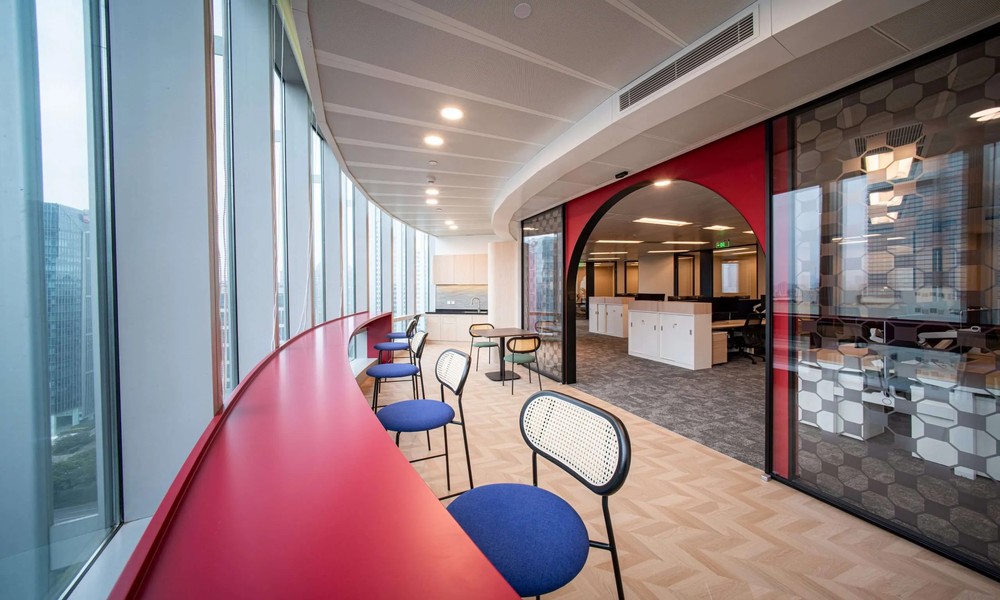
Hong Kong remains one of Asia’s leading financial centres, home to asset managers, private equity firms, family offices, hedge funds, and wealth management companies. As competition for clients and talent continues to intensify, many financial firms are re-evaluating the role their workplace plays in supporting business growth.
Office design is no longer viewed simply as a facilities decision. Increasingly, it is becoming part of a firm’s brand, client experience, and long-term business strategy.
Client Experience Is Becoming More Important
For financial firms, the office often serves as a physical representation of the organisation’s professionalism and credibility.
Private meeting rooms, premium reception areas, and well-designed client-facing spaces help create a strong first impression. This is particularly important for businesses that regularly host investors, high-net-worth individuals, and corporate clients.
As a result, many firms are investing in workplace environments that balance functionality with a polished, professional image.
Businesses seeking inspiration can explore how leading firms approach financial and family office workplace design in Hong Kong.
Workplace Design Can Support Talent Retention
Competition for skilled professionals remains a challenge across many financial sectors.
Employees increasingly expect workplaces that support collaboration, flexibility, and wellbeing. Modern offices often incorporate a mix of meeting spaces, quiet work areas, breakout zones, and upgraded workplace amenities to improve the overall employee experience.
Many firms view workplace investment as part of a broader talent attraction and retention strategy rather than a simple office upgrade.
Premium Office Buildings Continue to Attract Financial Firms
Despite the growth of hybrid working, many financial institutions continue to favour premium office locations.
Grade A developments offer strong transport connectivity, modern infrastructure, enhanced security, and prestigious business addresses that remain attractive to both clients and employees.
Landmark commercial towers continue to be popular choices for wealth management firms, asset managers, and family offices. Businesses evaluating premium office locations may find this guide to relocating an office within Hong Kong’s IFC complex useful for understanding the practical considerations involved in moving into a leading Grade A office development.
Conclusion
For many financial firms, office upgrades are no longer driven solely by operational requirements. They are increasingly motivated by client experience, talent attraction, and long-term business positioning.
As workplace expectations continue to evolve, firms that invest in high-quality office environments are often better positioned to strengthen their brand, support employees, and create lasting value for clients.
