

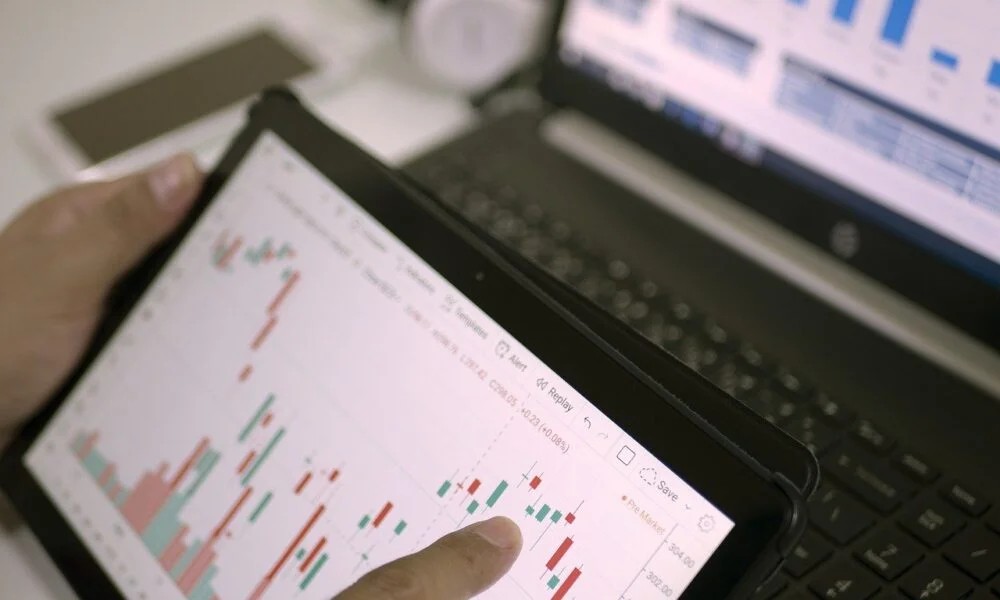
The best stock market app should help investors do more than place buy and sell orders. A useful app gives access to market updates, stock prices, portfolio performance, research data, watchlists, and account reports. For many investors, a stock market app becomes the main platform for tracking daily equity movements and managing investment decisions.
With stock prices changing throughout market hours, investors need a clear and reliable way to monitor the market. A well-designed app can help users follow indices, sector trends, company updates, and personal holdings from one place. However, users should remember that daily insights are useful only when they support planned decisions. They should not encourage impulsive trading.
What Is a Stock Market App?
A stock market app is a mobile application that allows users to access equity market information and trading services. Through the app, investors can check live prices, create watchlists, place orders, track holdings, and review market news.
Most stock market apps are connected with a Demat account and trading account. The trading account helps users buy and sell shares, while the Demat account stores shares electronically. Some apps also provide access to mutual funds, ETFs, IPOs, derivatives, and other financial products.
Why Daily Equity Insights Matter
Daily equity insights help investors understand what is happening in the market. These insights may include index movement, stock price changes, sector performance, company announcements, quarterly results, and market news.
For active traders, daily insights are important because price movement can affect short-term trading decisions. For long-term investors, daily insights help track important developments without reacting to every small market change.
The purpose of daily market tracking is not to buy or sell frequently. It is to stay informed and understand whether any development affects the investor’s portfolio or long-term plan.
Features That Make a Stock Market App Useful
A useful stock market app should be simple, secure, and informative. It should provide enough information for users to track the market without making the app difficult to use.
Important features include live stock prices, portfolio summary, order placement, research tools, market news, watchlists, price alerts, and transaction reports. These features help users manage both market access and portfolio tracking.
The app should also show charges clearly before order placement. Investors should know the estimated brokerage, taxes, and other costs linked to a transaction.
Live Market Tracking
Live market tracking is one of the main reasons investors use stock market apps. Users can check stock prices, index levels, top gainers, top losers, and market movement during trading hours.
This feature helps users understand whether the market is positive, negative, or range-bound. It also helps investors track stocks they already own or plan to buy.
However, live price movement should be used carefully. A sudden rise or fall in price does not always mean a stock is worth buying or selling. Investors should check the reason behind the movement before taking action.
Portfolio Dashboard for Better Review
A portfolio dashboard gives users a complete view of their investments. It shows invested value, current value, profit or loss, daily movement, and stock-wise performance. This helps investors understand how their holdings are performing.
A good dashboard should be easy to read. Investors should be able to identify which stocks are contributing positively and which ones are underperforming.
Portfolio dashboards are especially useful for long-term investors. They help users review allocation, sector exposure, and overall investment progress.
Watchlists and Price Alerts
Watchlists allow users to track selected stocks without buying them immediately. Investors can add companies they are interested in and monitor price movement, news, and volume trends.
Price alerts help users receive notifications when a stock reaches a selected price level. This can reduce the need to check the app repeatedly.
For example, if an investor wants to buy a stock only at a certain valuation range, a price alert can help them track the opportunity more efficiently.
Research Tools Inside Stock Market Apps
Research tools help investors study companies before making investment decisions. These tools may include financial statements, valuation ratios, earnings history, shareholding patterns, analyst views, and sector data.
Investors can use these tools to understand whether a company has strong fundamentals. Important factors include revenue growth, profit margins, debt levels, cash flow, return ratios, and management quality.
In the middle of investment planning, some users also compare direct equity with mutual fund options. An Mf Calculator can help estimate possible mutual fund investment values based on amount, tenure, and expected return assumptions. This can support better comparison between stock investing and fund-based investing.
Market News and Company Updates
Stock prices can be affected by news and announcements. A stock market app that provides timely updates can help investors stay aware of important developments.
Company updates may include quarterly results, dividend announcements, mergers, acquisitions, management changes, regulatory actions, and business expansion plans.
Investors should read updates carefully and avoid reacting only to headlines. A news item may have a short-term impact, but long-term decisions should depend on company fundamentals and financial performance.
Security Features in a Stock Market App
Since stock market apps handle money and securities, security is very important. Users should check whether the app offers two-factor authentication, biometric login, transaction PIN, device verification, and account alerts.
Investors should also follow safe practices. They should not share passwords, OTPs, or login details with anyone. Apps should be downloaded only from official app stores.
Regularly reviewing account statements and transaction history can also help users identify any unusual activity.
How Beginners Can Use Stock Market Apps
Beginners can use stock market apps to learn how the market works. They can start by creating watchlists, tracking major indices, reading company details, and understanding basic order types.
New investors should avoid trading frequently in the beginning. Instead, they should focus on learning how stock prices move, how company performance affects valuation, and how portfolio tracking works.
A simple app interface is important for beginners. If the platform is too complex, users may make mistakes while placing orders or reading portfolio data.
Common Mistakes While Using Stock Market Apps
One common mistake is buying stocks only because they appear in trending lists. A stock may be trending due to short-term news, speculation, or sudden volume movement. This does not always make it suitable for investment.
Another mistake is overchecking the portfolio. Watching daily changes too closely can create stress and lead to emotional decisions.
Investors should also avoid placing orders without checking charges, order type, and quantity. A small mistake in order entry can lead to unwanted transactions.
Choosing the Best Stock Market App
The best stock market app for one user may not be the same for another. Long-term investors may need strong portfolio tracking, research tools, and low delivery charges. Active traders may prefer advanced charts, quick execution, and multiple order types.
Users should compare app stability, customer support, security features, pricing, research access, and ease of use. A good app should support informed investing instead of encouraging unnecessary transactions.
The platform should also provide clear reports for holdings, trades, funds, and charges. These reports help investors maintain proper records.
Why a Good Trade App Matters
A Best Trade App becomes useful when it combines smooth order placement with market insights, portfolio tracking, research tools, and account security. Investors need more than fast transactions. They need reliable information and clear reporting to manage equity activity properly.
Before choosing any platform, users should check whether the app matches their investing style, risk comfort, and product requirements.
Conclusion
The best stock market app should help users track daily equity insights, manage portfolios, place orders securely, and review market information in a simple format. Daily insights are useful when they support research-based decisions, not impulsive trading. Investors should choose an app based on security, usability, charges, research tools, and portfolio tracking features. A reliable app can improve market access, but disciplined investing remains the key to better outcomes.
FAQs
What is the best stock market app used for?
A stock market app is used to track live prices, manage portfolios, place trades, review company data, and monitor market updates.
What features should a stock market app have?
It should have live market data, portfolio tracking, watchlists, price alerts, secure login, order tracking, research tools, and reports.
Can beginners use a stock market app?
Yes, beginners can use a stock market app if it has simple navigation, educational support, clear order placement, and easy portfolio tracking.
Is a stock market app safe?
A stock market app can be safe when it uses secure login, two-factor authentication, transaction PIN, account alerts, and is offered by a registered platform.
Should I choose a stock market app only because of low brokerage?
No. Low brokerage is useful, but users should also check security, app stability, research tools, customer support, order execution, and reporting features.
