

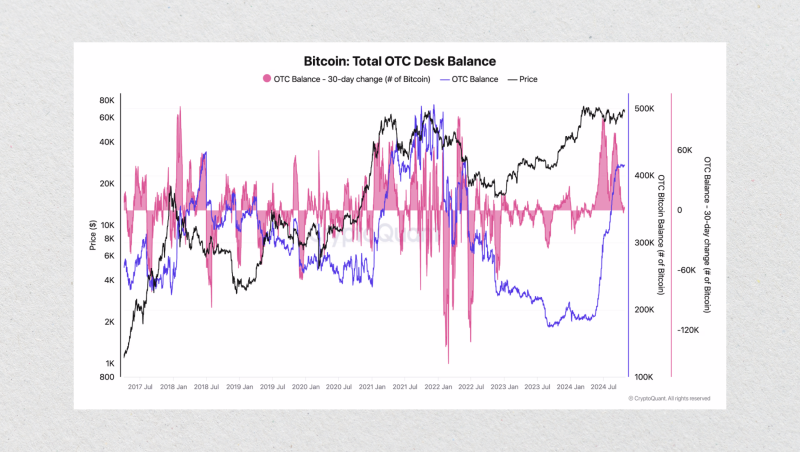
Over-the-counter (OTC) trading often sits quietly behind the scenes of global financial markets, yet it underpins a vast amount of professional trading activity. From foreign exchange and derivatives to fixed income instruments, OTC markets offer flexibility and scale that exchange-traded venues sometimes cannot.
However, that flexibility comes with its own complexities—particularly around counterparty risk, liquidity visibility, and pricing structures. For professionals navigating sophisticated portfolios, understanding how OTC trading truly works is not optional; it is foundational.
Understanding the OTC Market Structure
At its core, OTC trading refers to transactions conducted directly between two parties rather than through a central exchange. These trades are typically negotiated bilaterally, either via electronic platforms, voice brokers, or direct institutional relationships. Unlike exchange-traded instruments, OTC products are not standardised in the same way. Contract size, maturity, settlement terms, and even pricing methodologies can be customised.
For professionals asking what is otc trading in practical terms, the answer lies in this decentralised structure. OTC markets prioritise flexibility and bespoke solutions, which is why they are prevalent in asset classes such as FX forwards, interest rate swaps, credit derivatives, and certain equities. The absence of a central exchange allows participants to tailor trades precisely to their risk exposure or hedging needs.
However, decentralisation also means fewer uniform rules. Market transparency, risk management practices, and access to liquidity depend heavily on the counterparties involved and the infrastructure supporting the trade.
Counterparty Risk and Credit Exposure
One of the defining characteristics of OTC trading is counterparty risk—the possibility that the other party to a trade may default on its obligations. In exchange-traded markets, clearing houses typically step in as intermediaries, significantly reducing this risk. OTC markets, by contrast, rely on the creditworthiness of each participant.
Professional traders manage counterparty risk through several mechanisms. Credit support annexes (CSAs) are commonly used to govern collateral requirements, margin calls, and acceptable collateral types. Daily mark-to-market valuations help ensure that exposures are adjusted in real time, reducing the build-up of uncollateralised risk.
Regulatory reforms introduced after the global financial crisis have also reshaped OTC risk management. Mandatory central clearing for certain derivative classes and increased reporting obligations have improved oversight. Still, not all OTC instruments are centrally cleared, making due diligence on counterparties a critical part of the trading process.
Counterparty diversification is another essential strategy. By spreading exposure across multiple institutions, professionals reduce reliance on any single entity. In this environment, risk management is not a static checklist but an ongoing assessment of market conditions, credit profiles, and operational resilience.
Liquidity Without a Central Order Book
Liquidity in OTC markets operates differently from exchange-based trading. There is no single, visible order book where bids and offers are displayed to all participants. Instead, liquidity is fragmented across banks, dealers, and electronic trading venues.
For professionals, this means liquidity discovery is an active process. Traders often request quotes from multiple counterparties simultaneously, comparing pricing and execution terms. Relationships matter: institutions with strong credit standing or higher trading volumes may receive tighter spreads and better access to liquidity.
Electronic platforms have improved liquidity transparency in recent years by aggregating quotes from multiple liquidity providers. However, this transparency is still conditional. Market depth can change rapidly during periods of volatility, and liquidity may retreat without warning—particularly in stressed market conditions.
Understanding this dynamic is essential. OTC liquidity is often deep, but not always visible. Professionals must balance speed, price, and certainty of execution, especially when trading large notional sizes that could move the market.
Pricing Mechanics in OTC Trading
Pricing in OTC markets is inherently more nuanced than on exchanges. Rather than relying on a single market price, OTC pricing reflects a combination of factors: underlying market conditions, counterparty credit risk, trade size, and prevailing liquidity.
Bid-ask spreads in OTC markets are typically wider than those seen on highly liquid exchanges, but they are also negotiable. For institutional participants, pricing is often relationship-driven. Long-standing counterparties with consistent trading flows may benefit from more competitive pricing.
Valuation models play a critical role, particularly for complex derivatives. These models incorporate interest rate curves, volatility assumptions, and credit adjustments. The inclusion of credit valuation adjustment (CVA) and funding valuation adjustment (FVA) reflects the real economic cost of counterparty risk and funding.
From a governance perspective, robust pricing controls are vital. Independent price verification, model validation, and transparent valuation policies help ensure that OTC positions are accurately reflected on balance sheets and risk reports.
The Strategic Role of OTC Trading
For professional traders and institutions, OTC markets are not an alternative to exchanges—they are complementary. The ability to customise contracts, manage large exposures discreetly, and access deep pools of liquidity makes OTC trading indispensable for sophisticated strategies.
Yet, the benefits come with trade-offs. Counterparty risk must be actively managed, liquidity must be carefully assessed, and pricing must be thoroughly understood. OTC trading rewards preparation, expertise, and disciplined risk management.
Conclusion
OTC trading remains a cornerstone of global finance precisely because it caters to professional needs that standardised markets cannot always meet. Its decentralised nature demands a higher level of engagement—from understanding counterparties to interpreting pricing and liquidity signals.
For professionals who invest the time to master these elements, OTC markets offer flexibility, scale, and strategic depth. With the right frameworks in place, OTC trading is not a source of hidden risk but a powerful tool for navigating complex financial landscapes with confidence and clarity.
